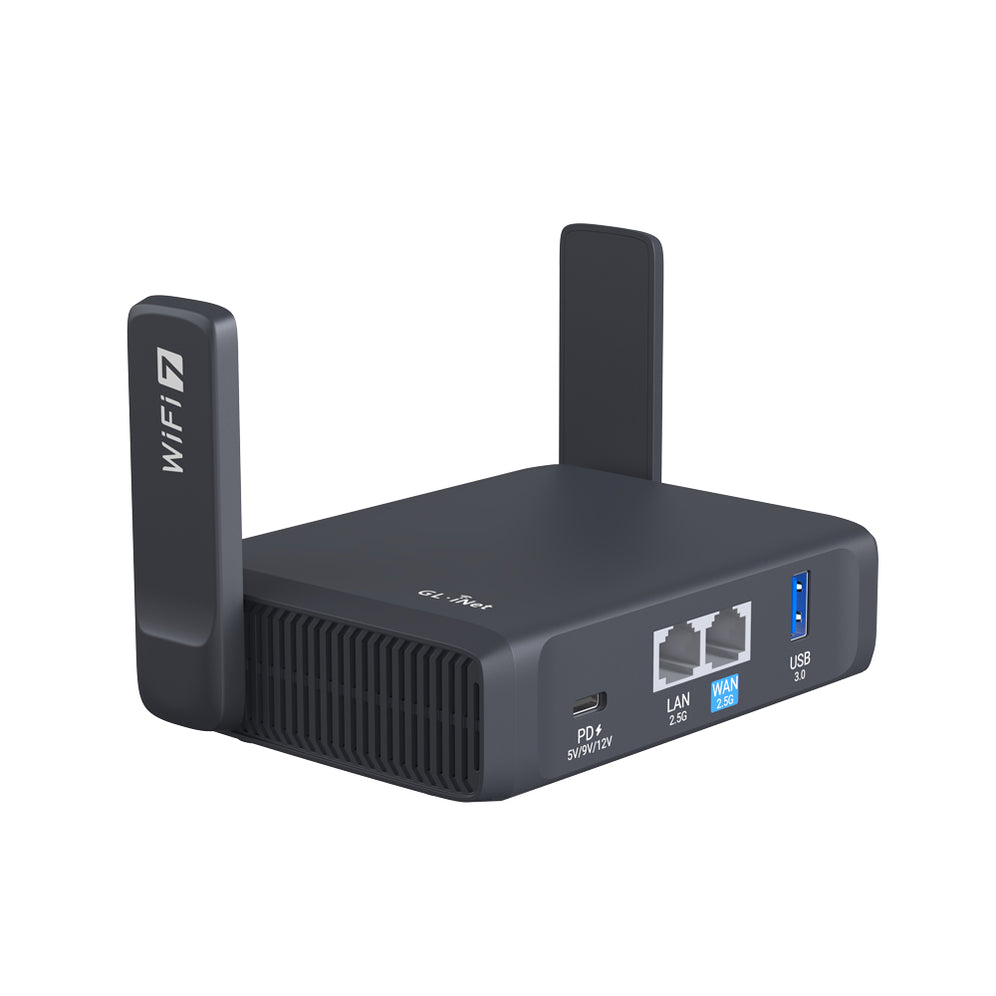
VPN Cascading is when a VPN connection is passing through more than one VPN server at the same time. Each VPN is limited to concealing one public IP address at the same time, therefore if a router is limited to processing a single VPN at a time, users will need one additional VPN router for every server the data passes through to conceal each server’s public IP address.
GL.iNet’s SDK4.1.0 update now supports VPN Cascading, it lets GL.iNet routers host a VPN server and forward data to a VPN client within the same device. In other words, a single device is sufficient to run complex VPN setups.
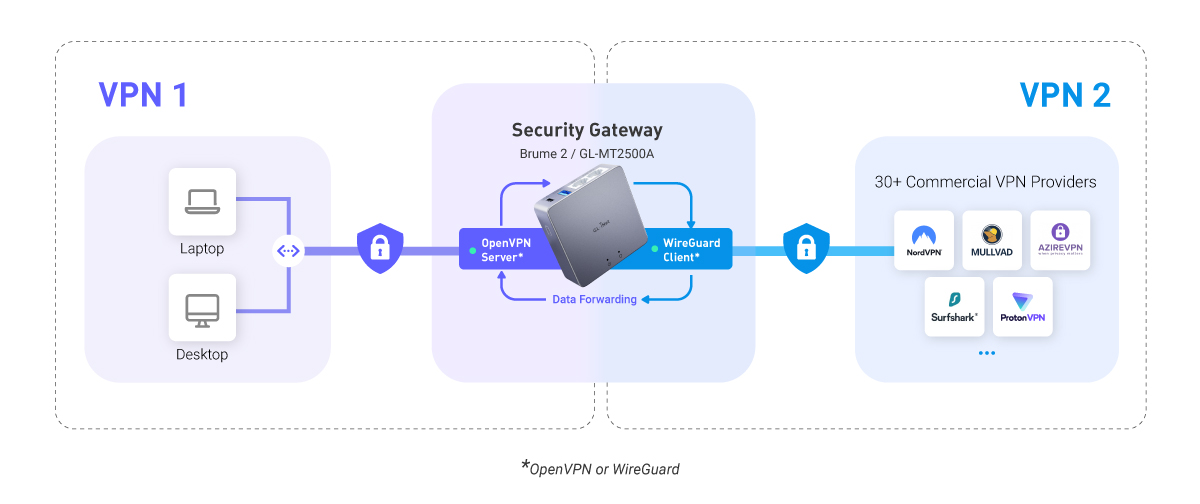
A VPN Cascading enabled device implies that users no longer require multiple devices to process multiple VPNs at the same time.
Reduced latency delay
Each time a user is requesting data packets from the public internet, the request will pass through multiple layers of devices or servers. Each layer of devices adds to the latency because the data has to travel a further distance, processed by the device CPU, before redirecting the data to the next device.
By reducing the number of devices to process additional VPN, although the VPN calculations still need to be processed, the data no longer needs to go through excessive distance and redirects, thus reducing the overall latency.
Simplifying the network for device management
Having a reduced number of deployed devices at an office or at home reduces the deployment cost and simplifies the device monitoring and maintenance process. Deploying a single device that can multitask often requires less deployment expense, including hardware cost, maintenance and replacement.
A common scenario would be when a user is remotely accessing a home or office’s VPN server, and using the server to access the public internet. In most office network setups, local network resources such as Wi-Fi printers, sensitive local files, or local web servers are not exposed to the public internet for protecting digital assets and footprints online.

To securely remote access local network resources stored at home or the office, Brume 2 (GL-MT2500/GL-MT2500A) can be used to host a VPN server, and using the VPN Cascading feature to forwards its data to the VPN client within the same device, effectively concealing the public IP address of both the device used for remote access and the office VPN server.
{"one"=>"Select 2 or 3 items to compare", "other"=>"{{ count }} of 3 items selected"}