Subscribe to our newsletters to stay informed about new blog updates.

Explore how the SMB Network Solution and the KVM Solution can revolutionise the future of technology

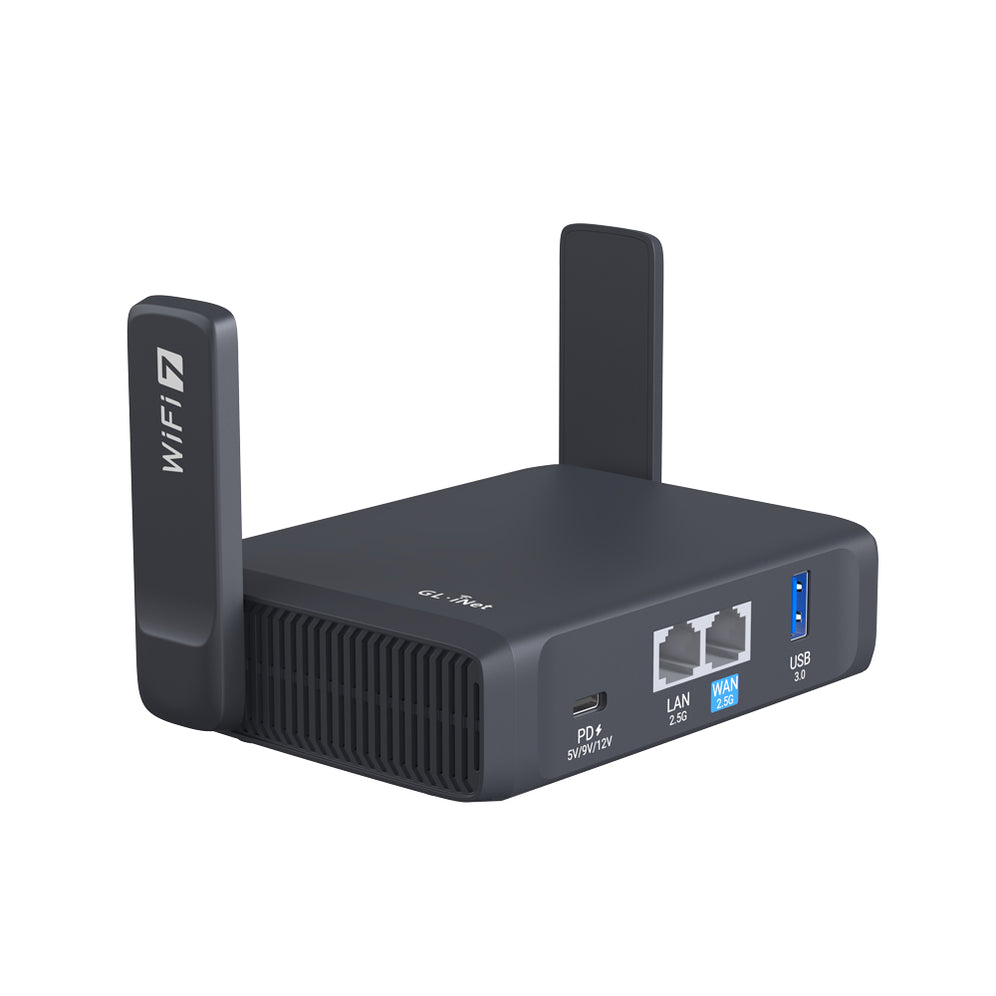
GL.iNet announces the launch of its latest product, the Slate 7 (GL-BE3600), a next-generation dual-band Wi-Fi 7 travel router featuring an interactive touchscreen.

Frustrated by unreliable remote access, an engineer built a simple, affordable, and resilient remote KVM. It evolved from a messy prototype to the launch of Comet (GL-RM1).

This guide explains Remote KVM, solution that allows distant devices control. It covers the fundamentals of how Remote KVM works and highlights three key benefits.

Learn how to improve internet speed and reduce lag caused by bufferbloat using Smart Queue Management (SQM) on GL.iNet Routers

At CES 2025, GL.iNet debuted Wi-Fi 7 devices, a remote KVM solution, a vSIM router, and its fastest 4G LTE router, generating significant online buzz.

GL.iNet introduces the Spitz Plus (GL-X2000), a high-performance 4G LTE Wi-Fi 6 router delivering fast internet access in rural and remote areas.

In this blog, we’ll dive into what vSIM is, explore its benefits, and explain why the Mudi with vSIM Technology is the ideal choice for experiencing vSIM technology.

Troubleshoot WireGuard VPN on GL.iNet routers with tips on port forwarding, DNS, MTU settings, and resolving connection and speed issues effectively.

GL.iNet partners with Morse Micro to launch HaLowLink 1, a Wi-Fi HaLow access point designed to enhance IoT connectivity with exceptional range and low power.

GL.iNet and Connected Solutions Group (CSG) announce KATALYST, a joint venture delivering carrier-agnostic connectivity solutions tailored for small businesses in North America.

Discover how to access your GL.iNet router remotely using WireGuard, GoodCloud, AstroWarp, or HTTPS. These methods offer secure and convenient network management from anywhere.
{"one"=>"Wählen Sie 2 oder 3 Artikel zum Vergleichen aus", "other"=>"{{ count }} von 3 Elementen ausgewählt"}
Wählen Sie das erste zu vergleichende Element aus
Wählen Sie das zweite zu vergleichende Element aus
Wählen Sie das dritte Element zum Vergleichen aus